
E-commerce
6 July 2026 · 5 min read
The "Mobile-First" Advice You are Getting is Already Outdated. Here is What Matters Now
Lisa
Digital Marketing Specialist at Stackdbase
Everyone says, "Design for mobile-first." It has become the ultimate industry cliché. It’s the safe, uninspired advice that every agency pitch deck includes to sound professional. But in 2026, saying your site is "mobile-first" is like claiming your restaurant has chairs. It’s the bare minimum requirement to exist, not a competitive advantage.
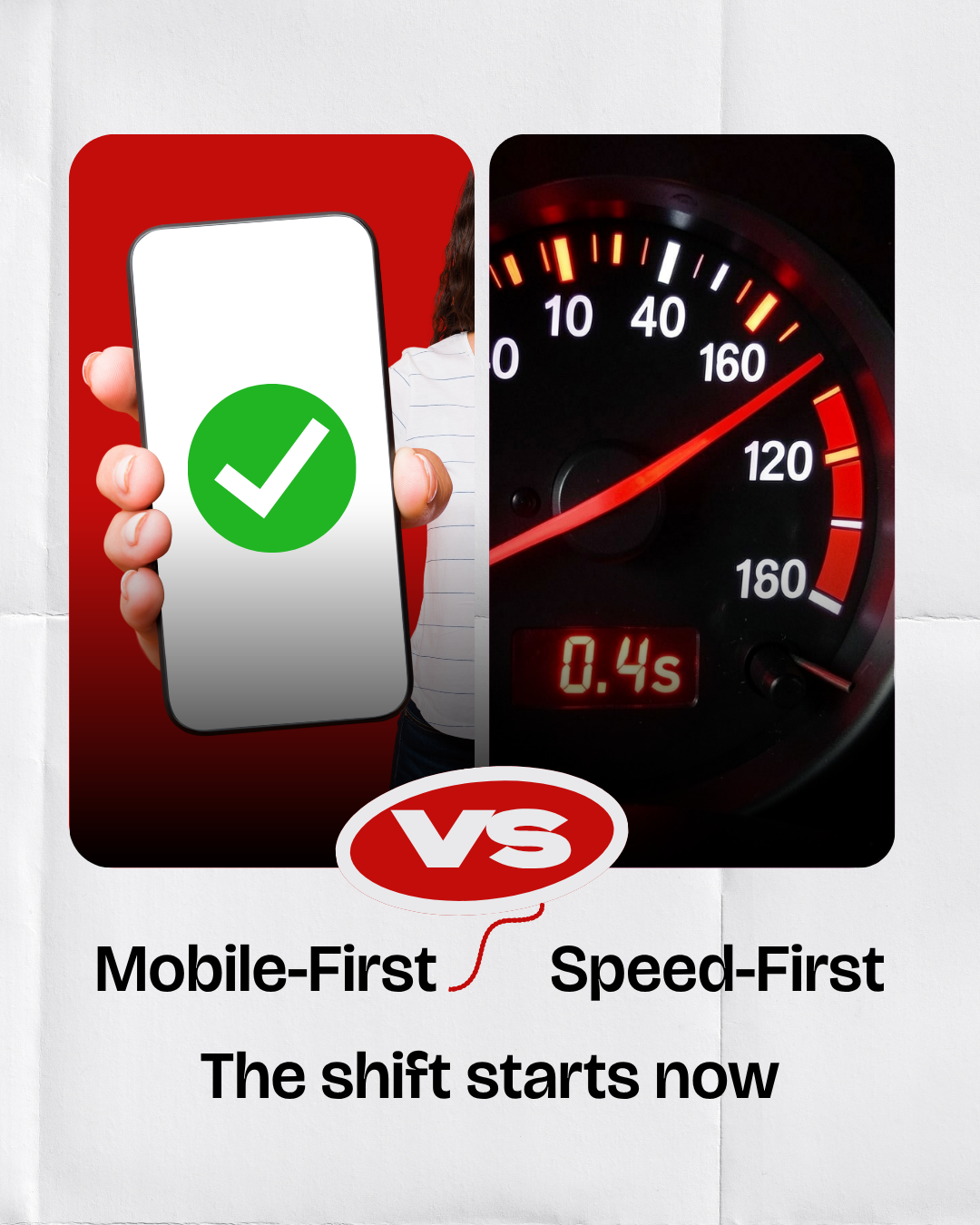
If you are still treating "mobile-first" as your North Star, you are behind the curve.
The Problem with "Design-First" Thinking
The trap that most founders and marketers fall into is focusing exclusively on the visuals. They spend weeks agonising over button colours, font pairings, and how the navigation collapses on an iPhone 16. And don’t get me wrong; design matters. But it is entirely secondary to the user experience of speed.
The reality of the modern web is simple: A beautiful, mobile-optimized site that loads in three seconds is effectively invisible. If your customer has to wait even a few extra milliseconds for your site to become interactive, they aren't looking at your beautiful typography. They are looking at the loading spinner, feeling a mounting sense of impatience, and mentally preparing to bounce.
The Shift: From "Mobile-First" to "Speed-First"
The real advantage in 2026 isn't just fitting your content onto a smaller screen; it’s about Mobile-First + Speed-First. Most B2B and high-end D2C websites aren't failing because they look bad. They are failing because they are bloated. They are packed with high-resolution images that aren't compressed, third-party tracking scripts that drag the site down, and heavy animations that look great on a MacBook Pro but choke a mid-range smartphone
To win today, you need to shift your internal metrics:
1. Kill the Bloat
If a script or a high-resolution image isn't actively converting a visitor, get rid of it.
2. Test on Reality, Not Office Wi-Fi
Your office Wi-Fi is a lie. Test your site speed on a throttled 4G connection. That is where your customers actually live.
3. Performance is UX
Start treating page speed as a core design element. If it doesn't load instantly, it isn't "designed well."
The Bottom Line
""Mobile-first" is a starting point, not a differentiator. If you want to scale, stop obsessing over how your site looks on a phone and start obsessing over how it performs on one."
Design the experience, but build the speed. Your conversion rates will thank you. At Stackdbase.com, we focus on the stuff that actually moves the needle for growing brands. Want to talk about your performance stack? Get in touch.
More reading
Other notes from the studio.
Website
Why Your Website Isn't a Project, It's a Product
Most people treat their website like a project. You build it, you launch it, you move on. But a website is a product. Here's how to shift your mindset.
Marketing
Why Asking for a Review Is the Most Underrated Marketing Tactic
A good review is worth 10 paid ads. It's social proof that works while you sleep. Yet most brands don't ask. Here's how to start.