
E-commerce
10 August 2026 · 5 min read
B2B Buyers Don't Care About Your Brand Story. They Care About Their Problem
Lisa
Digital Marketing Specialist at Stackdbase
Your brand story matters. Just not on your homepage. Here's a framework to keep your copy buyer-focused and convert more visitors.
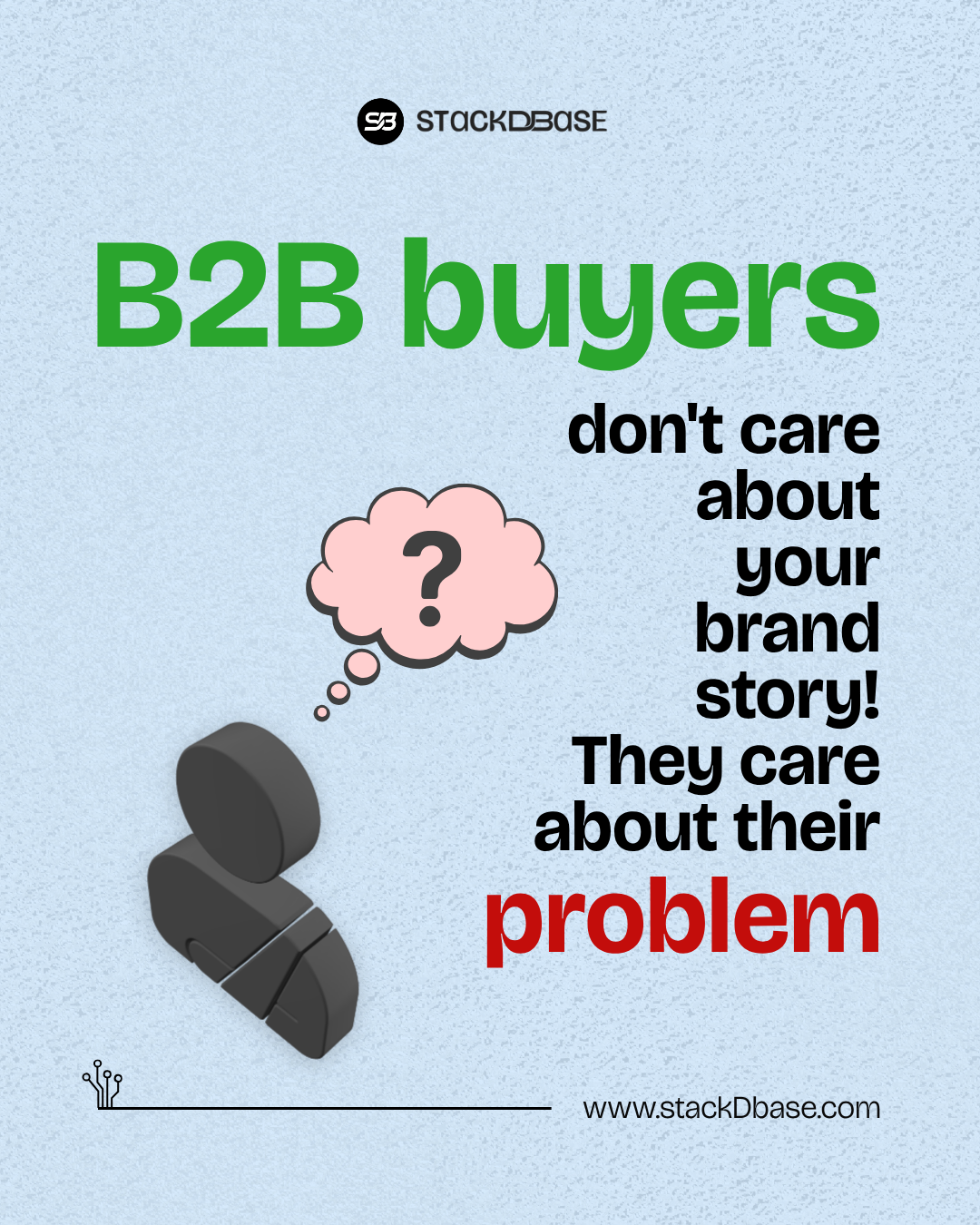
I see it all the time. A B2B website lands. Beautiful design. Well-crafted copy. And then I scroll. "About Us. Our Story. Our Mission. Our Values." Founder story. Company history. A timeline of achievements. I scroll faster.
Here's the truth B2B companies don't want to hear:
Your buyers don't care about your brand story. Not yet. They care about their problem. They care about whether you can solve it. They care about whether you're worth their time. Your brand story has a place. It's just not on the homepage.
Why B2B Buyers Are Different
B2B buyers aren't browsing for fun. They have a job to do. They're researching solutions. They're under pressure to make the right decision. They're comparing options. When they land on your website, they're asking one question: "Can you help me?" If your homepage doesn't answer that question immediately, they're gone.
What B2B Buyers Actually Want
1. Evidence You Understand Their Problem
"I see this is what you're struggling with. I know because I've helped others with the same thing."
2. Proof You Can Solve It
Case studies. Testimonials. Data. Results. Show them you've done this before.
3. Clarity About What Happens Next
What do they do now? Book a call? Request a demo? Start a trial? Make it obvious.
4. A Reason to Trust You
Not your story. Your expertise. Your process. Your transparency.
The Brand Story Trap
Your brand story is important. It's why people choose to work with you, it's what makes you different. But it's not the first thing a buyer needs. Think of it like a conversation; you don't start by telling your life story, you start by listening, by understanding, by showing you care. Your homepage should do the same.
A Buyer-Focused Homepage Framework
Step 1: Lead with Their Problem
Name the problem. Name the pain. Name the struggle. Instead of: "StackDbase | Ecommerce & Web Development" Try: "Your website should sell while you sleep."
Step 2: Show You Understand
Use their words. Their phrases. Their frustrations. Instead of: "We create innovative digital solutions" Try: "You've got a great product. Your website just isn't doing it justice."
Step 3: Name the Outcome
What changes for them? What's the result? Instead of: "We improve conversion rates" Try: "Get more qualified leads from your website."
Step 4: Prove It Works
A testimonial. A case study. A data point. Something that says "we've done this before." Instead of: "Trusted by businesses" Try: "Helped Flo Drinks launch their Shopify store. Orders started coming in within 24 hours."
Step 5: Tell Them What to Do
Clear, obvious, simple. "Book a call." "Request a demo." "Get your free audit."
What to Do with Your Brand Story
Your brand story belongs in your "About Us" page. Your "Why Us" page. Your "Our Process" page. Once a buyer trusts that you can solve their problem, they'll want to know more about you. That's when your story works. But not before.
A Simple Test
Read your homepage out loud. Does it sound like it's about you? Or does it sound like it's about your customer? If it's about you, rewrite it.
What to Do Next
📥 Download the free 'Buyer-Focused Copy Checklist'. It's a one-page PDF with these 5 questions. Use it to audit your homepage. Be honest. Then fix what doesn't pass the test.
Conclusion
Your brand story matters. It's what makes you unique. It's why people choose to work with you. But it's not the first thing a buyer needs. Lead with their problem. Show you understand. Prove you can help. Then tell them what to do next. Your homepage has 5 seconds. Don't waste them on your history. Spend them on their future.
At StackDbase, we build websites that put the buyer first. Because the fastest way to earn trust? Show someone you understand their problem.
Download checklist ↓More reading
Other notes from the studio.
Website
Why Your Website Isn't a Project, It's a Product
Most people treat their website like a project. You build it, you launch it, you move on. But a website is a product. Here's how to shift your mindset.
Marketing
Why Asking for a Review Is the Most Underrated Marketing Tactic
A good review is worth 10 paid ads. It's social proof that works while you sleep. Yet most brands don't ask. Here's how to start.