
Website
22 July 2026 · 5 min read
The Post-Launch Playbook: How to Keep Your B2B Website Growing
Lisa
Digital Marketing Specialist at Stackdbase
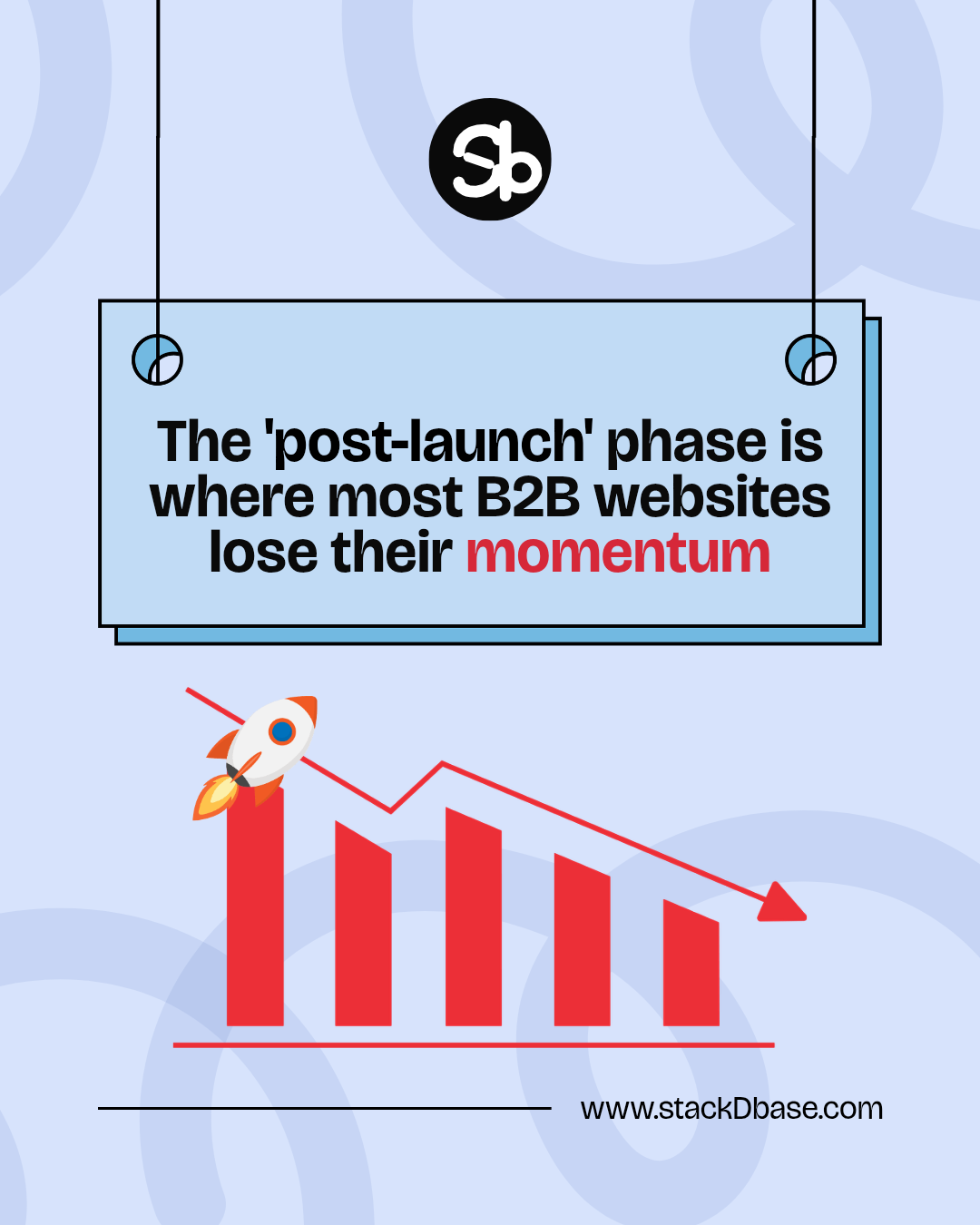
Most B2B websites lose momentum the moment they launch. Here's how to keep yours growing with continuous testing, iteration, and a product-first mindset.
Introduction
You've done it. The website is live. The launch email went out. The team celebrated. Now what?
For most B2B companies, this is where the momentum stops. The launch excitement fades, the budget gets reallocated, and the website becomes a static digital brochure. Months later, someone notices the conversion rate has dropped, traffic has plateaued, and the site feels outdated. It doesn't have to be this way.
The most successful B2B websites don't treat launch as the finish line. They treat it as day one. They understand that a website is a product, not a project. And like any product, it needs continuous maintenance, testing, and iteration.
Here's how to keep your website momentum going long after the launch party ends.
1. Start with the Right Mindset
The biggest mistake companies make is thinking the website is "done." Done is a dangerous word in digital. Technology changes. User behavior changes. Your business changes. A static website is a losing strategy. Shift your thinking from "project" to "product." A product is never finished. It evolves based on feedback, data, and changing needs. Your website should do the same.
2. Track What Actually Matters
You can't improve what you don't measure. Yet so many companies launch a website without proper analytics in place. Or they track vanity metrics like page views that don't tell you anything useful.
Start with these questions: Where are users dropping off? Which pages convert the most visitors? What's the average time on key pages? How many users complete your primary goal? Set up Google Analytics, Hotjar, Microsoft Clarity, or similar tools from day one. Without data, you're guessing.
3. Run Regular Audits
Don't wait for something to break before you look under the hood. Schedule regular audits to check: Broken links and 404 errors Page load speeds Mobile responsiveness SEO rankings and keyword performance Content accuracy and freshness Monthly audits catch small issues before they become big problems.
4. Test, Test, Test
The best websites are built on data, not opinions. A/B testing is one of the most powerful tools in your post-launch toolkit. Test one thing at a time: Headlines Call-to-action buttons Page layouts Pricing displays Form lengths Small changes can have outsized results. A different button colour, a clearer headline, or a simpler form can dramatically improve conversion rates.
5. Gather User Feedback
Your users will tell you what's working and what isn't. You just need to ask. Add feedback widgets, run user surveys, conduct user testing sessions, or simply reach out to customers and ask for their input. Pay attention to support tickets. What questions do customers keep asking? What confuses them? Those are clues about what your website isn't communicating clearly.
6. Keep Content Fresh
Search engines love fresh content. So do users. A blog post from three years ago doesn't build trust. Regular updates signal that your business is active, relevant, and engaged. Create a content calendar. Publish new articles. Update old ones. Refresh product pages. Add case studies. Show that you're growing.
7. Invest in Ongoing SEO
SEO isn't a one-time setup. It's an ongoing process. Monitor keyword rankings Update meta descriptions Build backlinks Optimize for voice search Improve internal linking Your competitors are doing it. You should be too.
8. Set a Post-Launch Schedule
Without structure, maintenance doesn't happen. Create a clear schedule: Weekly: Review analytics, check for errors Monthly: Run a full site audit, update content Quarterly: A/B test key pages, review SEO Annually: Re-evaluate the entire site strategy Build it into your calendar and stick to it.
9. Don't Be Afraid to Pivot
Sometimes the data tells you something uncomfortable. Maybe a page you loved doesn't convert. Maybe a feature you invested in isn't being used. Maybe your users want something completely different. Listen to the data. Don't fall in love with your assumptions. Be willing to change course.
10. Work with a Partner Who Stays Alongside You
The post-launch phase is where real value is created. But it's also where most agencies walk away. They launch, invoice, and disappear. At StackDbase, we believe in building for the long game. We set up the infrastructure you need to keep learning, we provide ongoing support and optimisation, and we help you continuously improve. Because a website that's never improved is a website that's losing you customers.
Conclusion
Launch day is exciting. But the months after launch are where you separate yourself from the competition. The companies that win online are the ones that never stop testing, learning, and iterating. Your website is not a project. It's a product. Treat it like one, and it will reward you with growth, engagement, and conversions. Ready to build something that keeps getting better? Let's talk.
More reading
Other notes from the studio.
Branding
The Medical Wellness Industry Has a Branding Problem. Here's What It Is.
Every IV drip clinic looks the same. Teal, white, drip icon. Here's how to stand out without losing your professional edge.
Branding
Why Your "Millennial" Brand Is Alienating Your "Gen Z" Customers
Millennials grew up on glossy perfection. Gen Z grew up on TikTok authenticity. Here's how to build a website that actually speaks to the next generation.