
E-commerce
7 September 2026 · 5 min read
Stop Selling the Product. Sell the Transformation
Lisa
Digital Marketing Specialist at Stackdbase
Your product isn't the product, the transformation is the product. Here's how to tell a transformation story that actually sells.
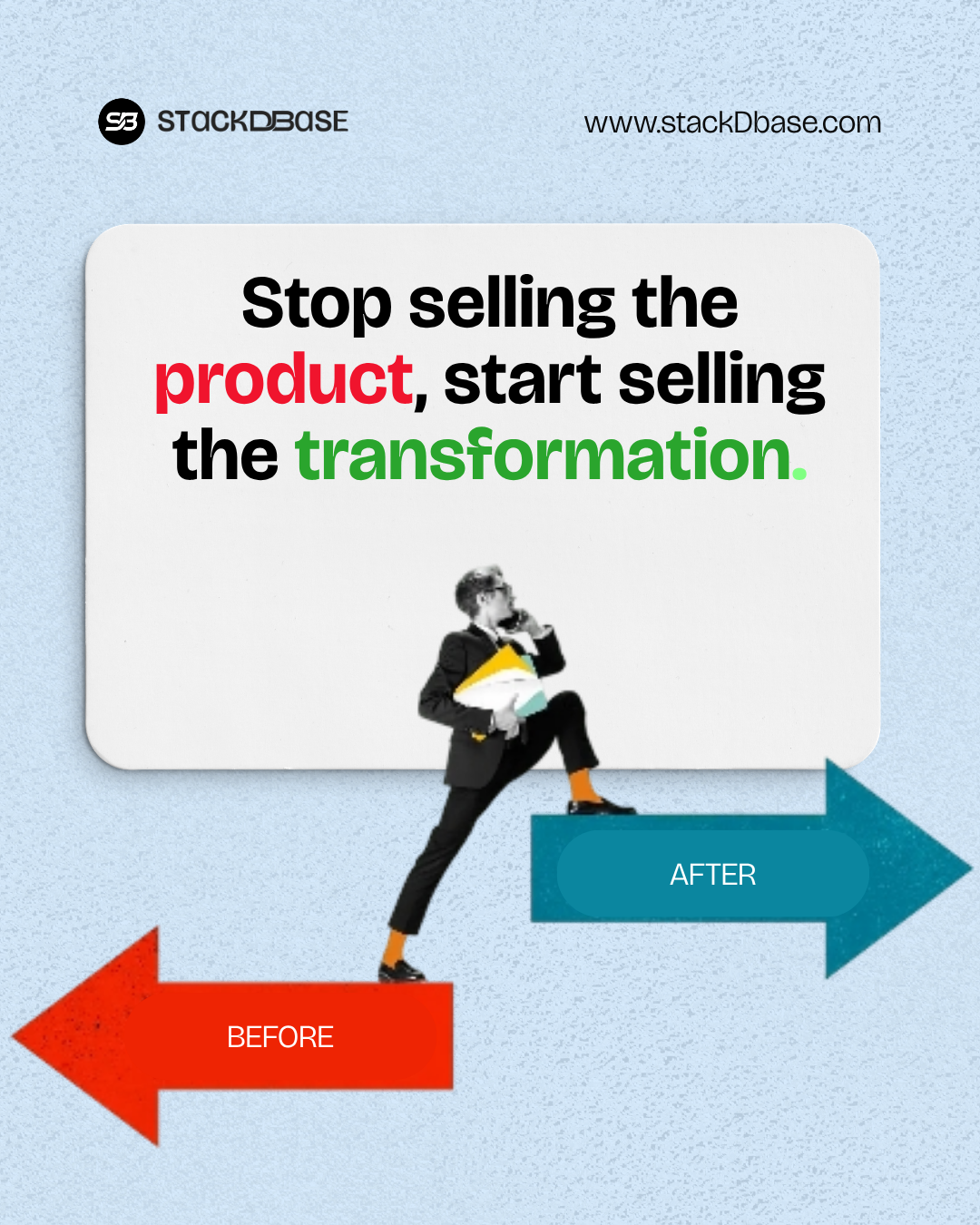
"What do you sell?" It's a simple question, but most founders get the answer wrong. They say things like: "We sell project management software." "We sell websites." "We sell fitness classes." "We sell skincare products."
All of these answers are technically correct, and all of them are incomplete. Your product isn't the product, the transformation is the product. What Are You Actually Selling? When you strip away the features, the specifications, and the technical details, what are people really buying?
They're buying:
Time: They want to spend less time on things they hate and more time on things they love and enjoy. Confidence: They want to feel sure; sure they made the right choice, sure they can handle what's next. Peace of Mind: They want to stop worrying. About their health, their business, their future. Status: They want to feel important, seen, respected. Connection: They want to belong. To feel understood, to be part of something. Control: They want to feel in control of their life, their business, their health. Your product is just the vehicle, the transformation is the destination.
The Problem with Selling Features
When you sell features, you're competing on specs and specs are boring. They're forgettable, easily copied.
Feature-focused marketing sounds like this:
"Our software has end-to-end encryption." "Our website includes a booking system." "Our fitness classes are 45 minutes long."
Transformation-focused marketing sounds like this:
"Your customers' data stays safe. Always. So you can sleep at night." "You'll never lose a client to a confusing booking process again." "You'll leave feeling stronger than you did when you walked in."
See the difference?
Features describe what your product does. transformations describe what your customer gets
How to Articulate Your Transformation
Start with the "Before" State
What does your customer's life look like before they buy from you? What's frustrating them? What's keeping them up at night? What are they afraid of? What are they missing?
Get specific. Use their words, paint a picture of the problem.
Then Describe the "After" State
What does their life look like after they buy from you? What's better? What's easier? What are they no longer worried about? What new possibilities have opened up?
Again, be specific. Make it feel real. Help them imagine themselves there.
Name the Gap
The gap between the "before" and the "after" is where your product lives. That gap is the transformation you're selling
Examples of Transformation Storytelling
Example 1: Project Management Software
Before: "Our team is chaotic. We miss deadlines, clients are getting frustrated." After: "We're organized. We deliver on time, our clients trust us." The Transformation: From chaos to control.
Example 2: Website Design Agency
Before: "Our website is old. We're losing leads, we look unprofessional." After: "Our website works for us. We get leads, we look like the experts we are." The Transformation: From invisible to undeniable
Example 3: Health and Wellness
Before: "I'm exhausted. I don't recognize myself, I've lost all my energy." After: "I feel like myself again. I have energy, I'm excited to start the day." The Transformation: From depleted to empowered
Why Transformation Selling Works
1. It's Emotional
Logic makes people think, emotion makes people act. Transformation stories trigger the emotional decision-making process.
2. It's Memorable
People may forget features, but they remember how you made them feel. A story about transformation stays with them.
3. It's Differentiating
When everyone sells features, you're in a race to the bottom. When you sell transformation, you stand out.
4. It Justifies Price
A $100 product that solves a $1,000 problem is a no-brainer. When you articulate the value of the transformation, price becomes secondary.
How to Apply This Framework
Step 1: Interview Your Best Customers
Ask them: "What was life like before you bought from us? What changed after?"
Step 2: Listen for the Transformation Language
Pay attention to the words they use. "Frustrating" "Chaotic" "Exhausting" vs. "Simple" "Organized" "Empowered."
Step 3: Map the Journey
What steps did they take to get from the "before" to the "after"? Your product is just one part of that journey.
Step 4: Tell the Story
Use the transformation story framework to tell a story that connects emotionally with your ideal customer.
What to Do Next
Download the free 'Transformation Story Framework'. Use it to:
Identify your customer's real problem. Articulate the transformation you deliver. Craft marketing that actually connects. Build a brand that people remember.
Conclusion
You're not selling software, you're selling the feeling of being organized. You're not selling websites, you're selling the feeling of being credible. You're not selling fitness classes, you're selling the feeling of being strong. Stop selling the product, start selling the transformation. At StackDbase, we help you tell your transformation story. Because when you sell the outcome, price becomes secondary. Ready to tell your transformation story? Download the template, answer the questions, then let's talk.
Download Framework ↓More reading
Other notes from the studio.
Branding
The Medical Wellness Industry Has a Branding Problem. Here's What It Is.
Every IV drip clinic looks the same. Teal, white, drip icon. Here's how to stand out without losing your professional edge.
Branding
Why Your "Millennial" Brand Is Alienating Your "Gen Z" Customers
Millennials grew up on glossy perfection. Gen Z grew up on TikTok authenticity. Here's how to build a website that actually speaks to the next generation.