
Website
17 August 2026 · 5 min read
The Biggest Lie in Web Design: "We'll Make It Look Premium"
Lisa
Digital Marketing Specialist at Stackdbase
"Premium" usually means expensive, not effective. Here's how to evaluate whether your website actually works.
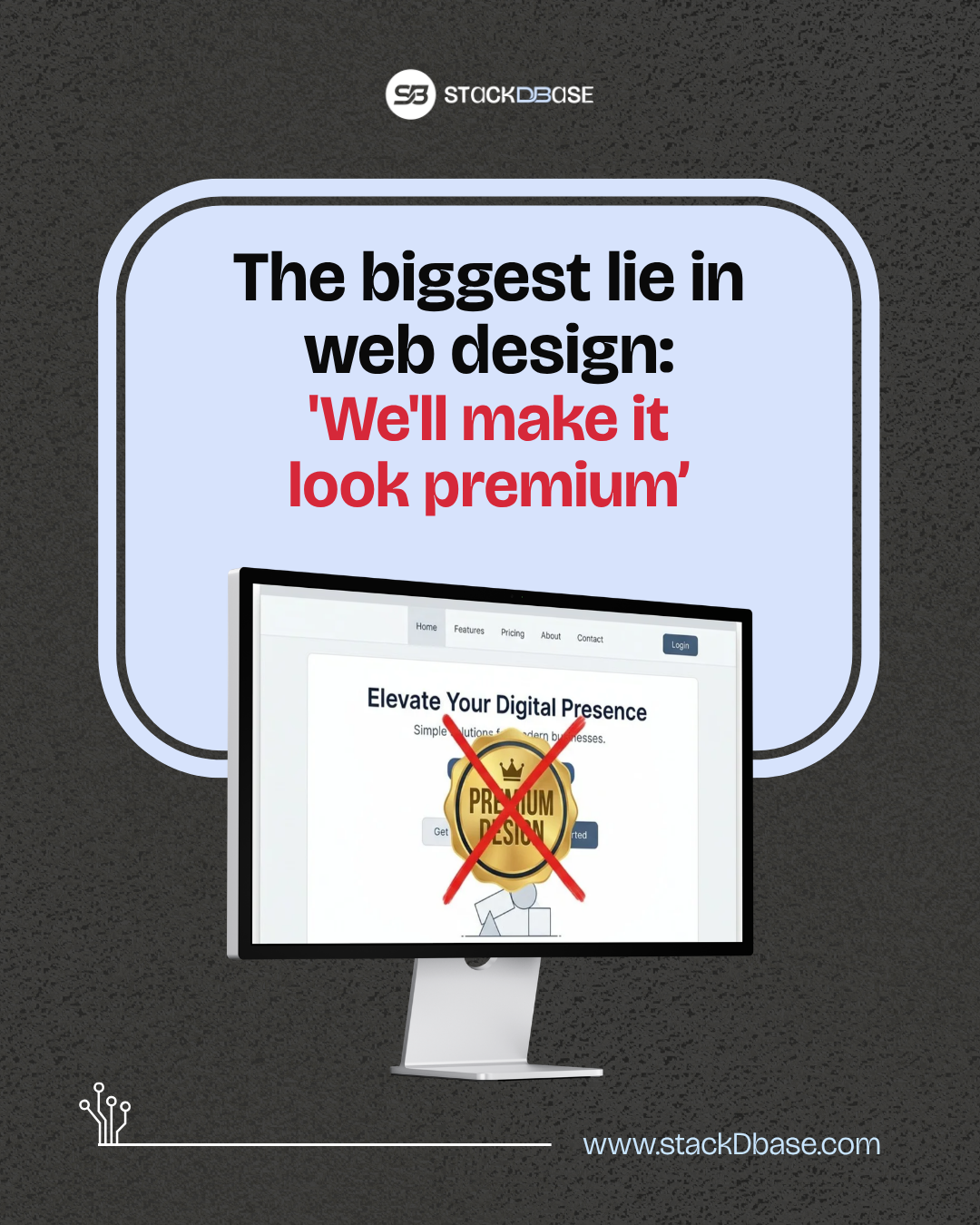
I hear it all the time. "We want our website to look premium." "We need a premium design." "Our competitors have premium sites. We need one too." The request is always the same, the assumption is always the same. But the reality? "Premium" usually means expensive, not necessarily effective.
I've seen stunning websites that fail completely. Beautiful design, polished visuals, award-worthy aesthetics. Zero conversions. I've also seen simple websites that print money: Clean layout, clear messaging, fast loading. We need to stop chasing "premium" and start chasing effective.
What "Premium" Actually Means
From a design perspective:
Custom fonts and high-end typography. Animated interactions and transitions. High-resolution imagery and custom graphics. Complex layouts and unique navigation. All of these take time, all of them cost money, all of them can slow down your site.
From a business perspective:
Higher development costs. Longer build times. Slower page loads. More points of failure. Frequently, worse user experience. "Premium" is a design brief, not a business outcome.
What "Effective" Actually Means
From a design perspective:
Clear visual hierarchy. Fast load times. Mobile responsiveness. Simple, intuitive navigation. Obvious calls to action.
From a business perspective:
Higher conversion rates. More qualified leads. Better SEO rankings. Lower bounce rates. Increased revenue. "Effective" is a business outcome. Not a design brief.
The Real Cost of Chasing "Premium"
You lose speed.
Complex animations, high-resolution images, custom fonts. All these slow down your site; And every second of delay costs you conversions.
You lose clarity.
Fancy design often gets in the way of your message. Visitors shouldn't have to figure out where to look, they should just know.
You lose flexibility.
"Premium" sites are often harder to update. They're more complex, more fragile, more expensive to maintain.
You lose money.
Higher build cost, lower conversions, longer load times. It's a triple loss.
The Framework: Evaluate Your Design
Question 1: Does It Load Fast?
What's your page speed score? Are images optimized? Is your hosting adequate? Are you using a CDN? If your site is slow, nothing else matters.
Question 2: Can Visitors Understand What You Do?
Is it clear what you offer within 5 seconds? Is the headline specific and relevant? Does the copy use words your customers actually use? If visitors don't understand your value, they'll leave.
Question 3: Is It Easy to Navigate?
Can visitors find what they need quickly? Is the navigation structure logical and simple? Are there obvious pathways through the site?
Question 4: Are Calls to Action Obvious?
Can visitors easily see what to do next? Are CTAs clearly designed and prominently placed? Does the text motivate action? If the next step isn't obvious, visitors won't take it.
Question 5: Does It Work on Every Device?
Is it fully responsive? Does it work on mobile and tablet? Are buttons easy to tap on smaller screens? Your customers are on mobile. Your site needs to work there too.
Question 6: Does It Support SEO?
Is it optimized for search engines? Are meta titles, descriptions, and alt text optimised? Is the content useful, authoritative, and relevant? If nobody can find you, nobody will buy from you.
Download the scorecard and use the criterium to evaluate your own site.
What to Do Next
Step 1: Audit Your Site
Use the scorecard to evaluate your site honestly. What's working? What's just pretty?
Step 2: Prioritize Fixes
Start with what matters most. Speed. Clarity. Conversion.
Step 3: Test and Iterate
Measure the impact. What improved? What still needs work?
📥 Download the free 'Effective vs. Premium' scorecard on the blog.
Conclusion
"Premium" is a trap. It's expensive, it's often unnecessary, it frequently hurts your results. Instead, chase "effective." Build a site that loads fast, converts well, and makes it easy for customers to understand your value. Because a site that looks premium but doesn't convert? That's just expensive wallpaper.
At StackDbase, we build effective websites. Websites that sell, websites that convert, and websites that work. Ready to build a website that actually works? Let's talk.
Download scorecard ↓More reading
Other notes from the studio.
Website
Why Your Website Isn't a Project, It's a Product
Most people treat their website like a project. You build it, you launch it, you move on. But a website is a product. Here's how to shift your mindset.
Marketing
Why Asking for a Review Is the Most Underrated Marketing Tactic
A good review is worth 10 paid ads. It's social proof that works while you sleep. Yet most brands don't ask. Here's how to start.