
Process
29 July 2026 · 5 min read
The Deal We Didn't Win and the Lesson We Needed
Lisa
Digital Marketing Specialist at Stackdbase
We didn't win a deal months ago. The client chose a cheaper agency. Their reason wasn't merely price. It changed how we sell.
The "No" That Taught Us Everything
I'll be honest with you. We got a "no" a few months back. It was one of those opportunities that felt perfect. The client needed a new website. We had the expertise. The chemistry was there. The proposal was solid.
And then they went with someone else. A cheaper agency. At first, we wanted to shrug it off. It happens. Not every deal closes. That's business. But something about this one kept nagging at us. So we reached out and asked a question that most agencies don't ask: "Why did you choose them over us?"
What they told us changed how we think about selling. The Answer Wasn't Price "We felt like they would hold our hand more," the client said. "They promised regular check-ins. They made us feel like we'd be their priority. We didn't get that same reassurance from you."
We sat with that for a while. Because they were right. We had focused on showcasing our expertise. Our portfolio. Our experience. We talked about what we would build for them. The design. The functionality. The features.
What we didn't talk about enough was how we would work with them. Our process. Our communication rhythm. Our commitment to making them feel safe and supported throughout the project.
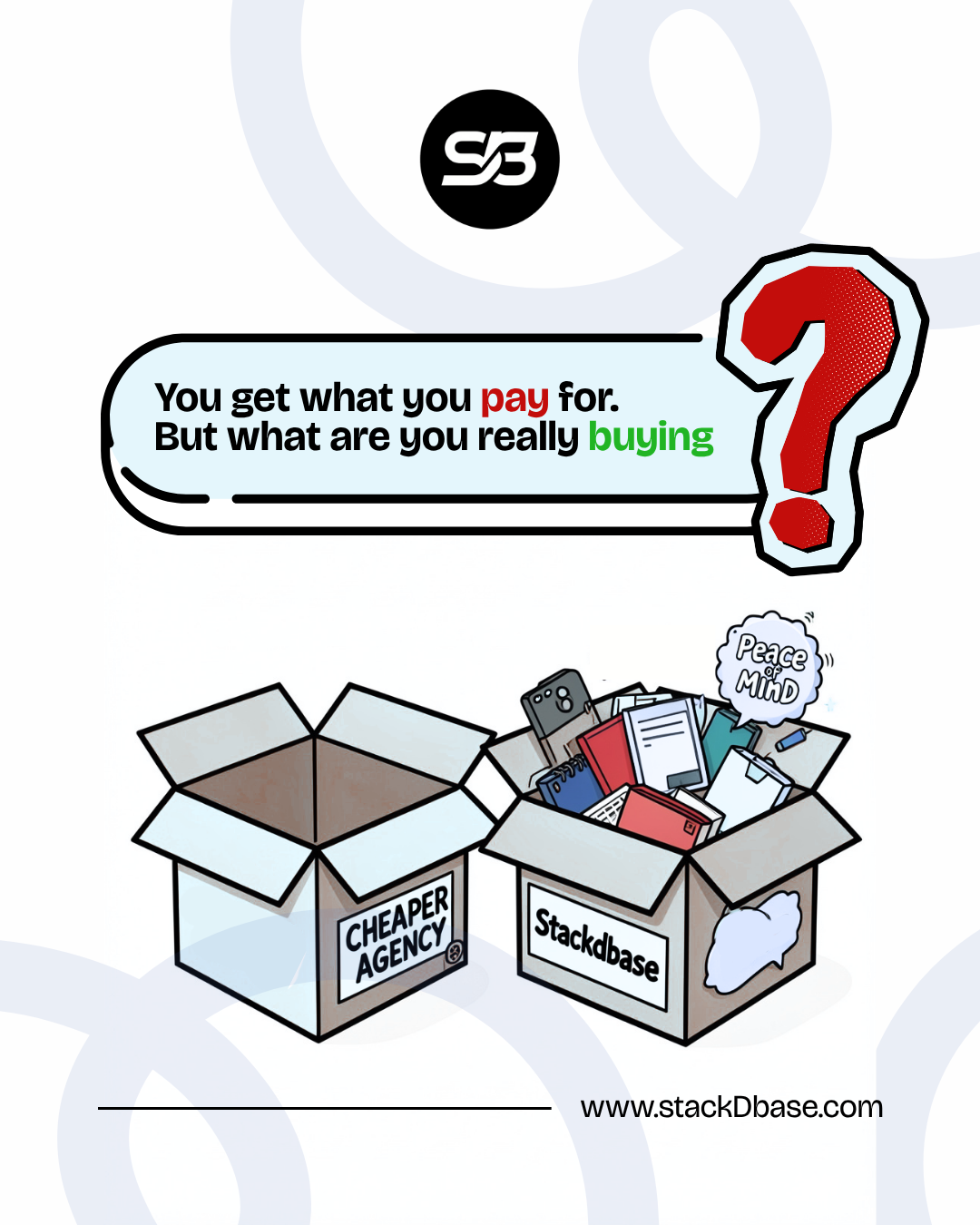
We were selling "product." They wanted "peace of mind." The Real Cost of Fear Here's what we realized: for many business owners, hiring a digital commerce agency is scary.
It's a big investment. They've probably had a bad experience before. A freelancer who disappeared. An agency that handed them off to a junior designer. A website that launched late, over budget, and underwhelming.
When a client chooses a cheaper agency, they're not always choosing the cheaper price. They're choosing the cheaper anxiety. They're choosing the option that feels less risky. Our client didn't care as much about saving money as they did about feeling safe. And we hadn't made them feel safe.
What We Learned
1. Sell the Process First, the Product Second
The outcome is important, but the journey is what clients worry about. We now lead with how we work, not just what we deliver. Clear milestones. Regular updates. Open communication. Founder-led accountability.
2. Talk About Communication Rhythm Early
We used to assume clients knew what to expect. We assumed our process was obvious. It wasn't. Now we explicitly say: "You'll hear from us weekly. You'll get a progress update every Friday. You can reach out anytime and speak directly to the founder."
3. Address the Elephant in the Room
Clients are worried. So we name it. "We know you've probably had a bad experience before. That's not how we operate. Here's how we keep you informed and involved at every step."
4. Don't Dismiss Price, But Don't Obsess Over It
Price matters. But rarely is it the deciding factor. If a client leaves on price, there was usually something else at play. Dig deeper. Understand the real objection.
5. Build Trust Before You Build Anything
Trust isn't earned at the end. It's earned at the beginning. In the proposal. In the first conversation. In the way you make someone feel from the very first interaction.
What We Changed
Since that experience, we've made three changes: Our proposal now includes a detailed "How We'll Work Together" section We talk about communication and process in our first discovery call We promised founder-led accountability upfront.
Conclusion
We're grateful we lost that deal. It taught us something we would have learned too late otherwise. If you're selling websites, apps, or any service, ask yourself: are you selling the product or are you selling peace of mind? Because the client who feels safe is the client who stays. At StackDbase, we're building a business around trust, not just technology. Ready to work with a partner who puts your peace of mind first? Let's talk.
More reading
Other notes from the studio.
Branding
The "About Us" Page Is Not About You Excerpt:
Your About Us page shouldn't be a biography, it should be a promise to your customer. Here's how to build trust at scale.
E-commerce
Stop Selling the Product. Sell the Transformation
Your product isn't the product, the transformation is the product. Here's how to tell a transformation story that actually sells.