
E-commerce
19 August 2026 · 5 min read
When a 'cheaper' agency wins the deal (and what we learned)
Lisa
Digital Marketing Specialist at Stackdbase
Price wasn't the deciding factor, trust was. Here's what we learned from losing a deal to an agency that charged half our price.
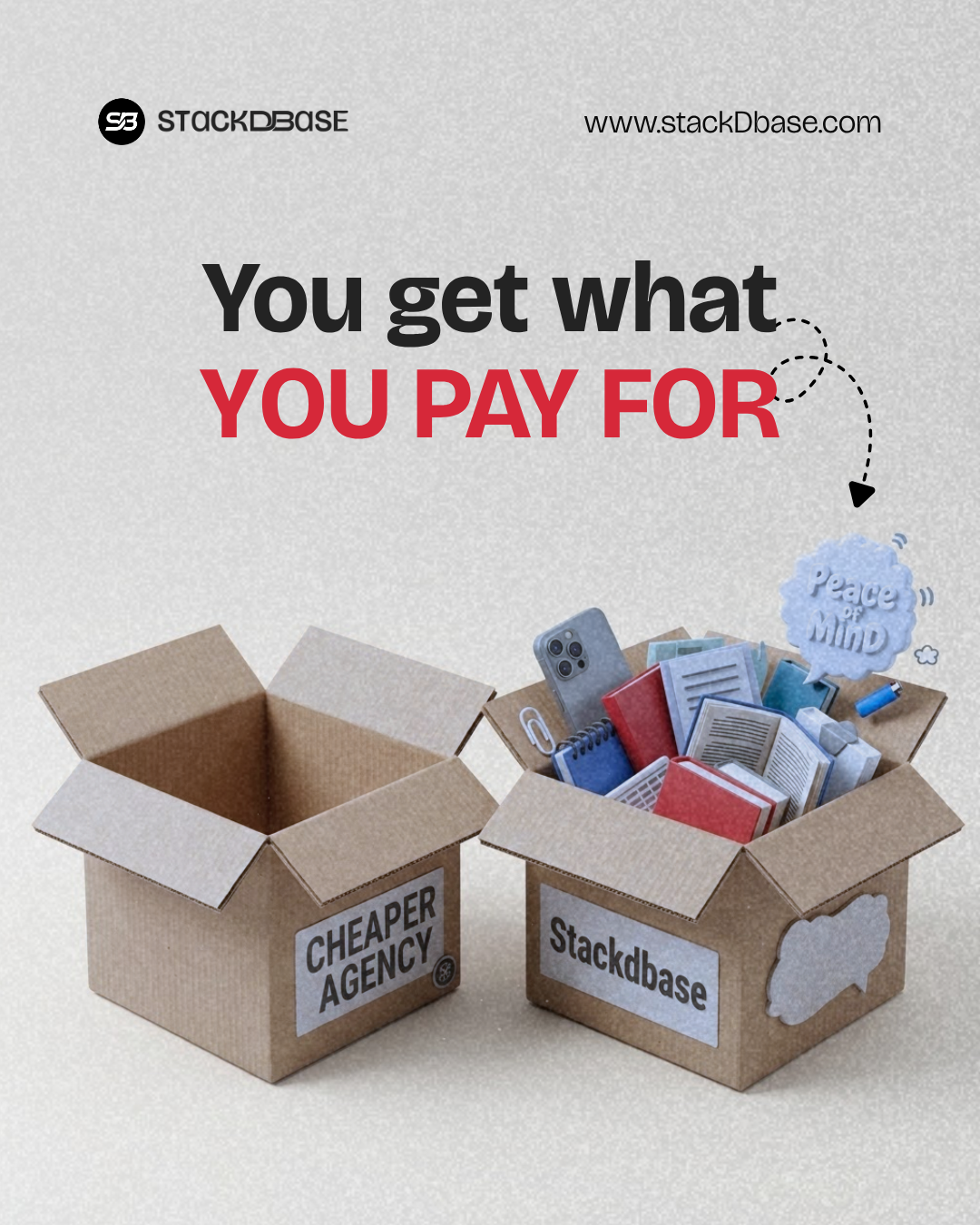
We lost a deal recently, to an agency that charged half our price. It stung, I won't pretend it didn't. We had the better portfolio, the stronger experience, the more impressive case studies. And they chose someone else, someone cheaper.
At first, I wanted to dismiss it. "They just went for the lowest price." But something didn't sit right. So I did something most agencies don't do, I asked the client why. Their answer changed how I think about selling.
The Unexpected Answer
"They made us feel safe." That was it. Not "they were cheaper." Not "they had better work." Not "they had more experience." They made the client feel safe.
What That Actually Means
It means the client trusted them; it means they felt heard, it means they believed this agency would deliver without drama, without surprises, without disappearing.
"When a client chooses a cheaper agency, they're not always choosing the cheaper price. They're choosing the cheaper anxiety. They're choosing the option that feels less risky."
The price difference wasn't the real issue. The trust gap was.
What We Were Selling
We were selling our expertise. Our portfolio. Our awards. Impressive? Yes. Reassuring? Not enough. We talked about what we would build; the design, the functionality, the features. What we didn't talk about enough was how we would work with them. Our process, our communication rhythm, our commitment to making them feel safe and supported. We were selling "product." They wanted "peace of mind."
The Real Cost of Fear
Here's what I realized: for many business owners, hiring a web agency is scary. It's a big investment. They've probably had a bad experience before; a freelancer who disappeared, an agency that handed them off to a junior designer, a website that launched late, over budget, and underwhelming.
Every client walks in with that fear whether they say it or not. When a client chooses a cheaper agency; they're not choosing the cheaper price, they're choosing the cheaper anxiety. The client didn't care as much about saving money as they did about feeling safe.
What We Learned
1. Sell the Process First, the Product Second
The outcome is important; but the journey is what clients worry about. We now lead with how we work, not just what we deliver. Clear milestones. Regular updates. Open communication.
2. Talk About Communication Rhythm Early
We used to assume clients knew what to expect; we assumed our process was obvious. It wasn't. Now we explicitly say: "You'll hear from us weekly. You'll get a progress update every Friday. You can reach out anytime."
3. Address the Elephant in the Room
Clients are worried. So we name it. "We know you've probably had a bad experience before, that's not how we operate. Here's how we keep you informed."
4. Don't Dismiss Price, But Don't Obsess Over It
Price matters but rarely is it the deciding factor. If a client leaves on price, there was usually something else at play. Dig deeper. Understand the real objection.
5. Build Trust Before You Build Anything
Trust isn't earned at the end, it's earned at the beginning. In the proposal. In the first conversation. In the way you make someone feel from the very first interaction.
What We Changed
Since losing that deal, we've made three changes: Our proposal now includes a detailed "How We'll Work Together" section. We talk about communication and process in our first discovery call. We promise founder-led accountability upfront
The Lesson
Price is a factor, but trust is the deciding factor. Clients don't just want a website, they want someone who will guide them. Reassure them. Make them feel like they're in good hands. If you're selling websites, apps, or any service, ask yourself: are you selling the product or are you selling peace of mind? Because the client who feels safe is the client who stays. At StackDbase, we're building a business around trust, not just technology. Ready to work with a partner who puts your peace of mind first? Let's talk.
More reading
Other notes from the studio.
Website
Why Your Website Isn't a Project, It's a Product
Most people treat their website like a project. You build it, you launch it, you move on. But a website is a product. Here's how to shift your mindset.
Marketing
Why Asking for a Review Is the Most Underrated Marketing Tactic
A good review is worth 10 paid ads. It's social proof that works while you sleep. Yet most brands don't ask. Here's how to start.